
The appellate panel appeared puzzled by the Golden State allowing some vaccination exemptions while refusing the same religious relief that most other U.S. states provide.
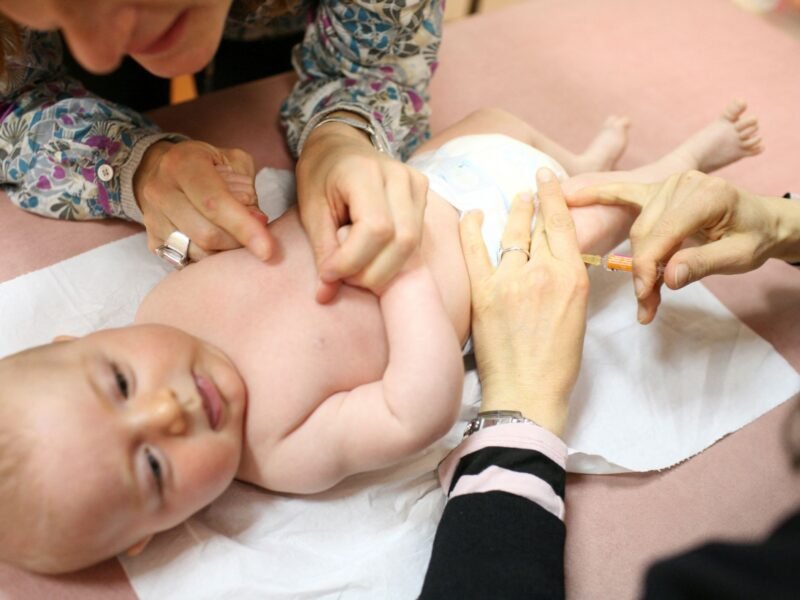
PASADENA, Calif. (CN) — Four mothers turned to a Ninth Circuit panel Friday to reinstate their lawsuit challenging California’s prohibition on religious exemptions to the state’s requirement that children need to be vaccinated against a slew of childhood diseases to attend school.
Erin Mersino, an attorney representing the mothers, argued that the trial judge who dismissed their lawsuit last year should have applied a more demanding test to evaluate the California statute — strict scrutiny rather than rational basis review — because it infringes on their right to freedom of religion expression under the First Amendment.
“Recent Supreme Court precedent confirms that, when a state burdens parental religious rights concerning their children’s upbringing, education and medical decisions, strict scrutiny applies,” Mersino told the three-judge appellate panel in Pasadena, California.
The attorney pointed to the Supreme Court’s ruling last year in Mahmoud v. Taylor, which found that a Maryland county school board’s decision to introduce LGBTQ+ inclusive storybooks without allowing parents to remove their children from the classroom violated the parents’ religious rights.
In the wake of its Mahmoud decision, however, the Supreme Court rejected an emergency bid by a conservative nonprofit, We the Patriots, on behalf of of a woman identified as Jane Doe, asking the justices for an exemption to Ventura Unified School District’s vaccine mandates.
The Jane Doe case as well as an appeal in a third lawsuit where a judge denied a preliminary injunction that would have lifted California’s ban on religious exemptions were also argued before the Ninth Circuit panel on Friday. The plaintiffs sued because their religious beliefs don’t permit vaccinating their children.
Until 2016, California had allowed personal belief exemptions to its vaccination requirement for school children. The 2015 so-called Disneyland measles outbreak in Southern California prompted state lawmakers to scrap those exemptions as it appeared many of the people infected during the outbreak weren’t vaccinated.
While the panel didn’t tip their hand whether they were inclined to send the mothers’ lawsuit back to the trial judge, or go as far as to apply strict scrutiny to the statute themselves, they asked some pointed questions of state’s attorney regarding the exemptions that are allowed — and the fact that 46 states permit religious exemptions to their vaccination requirements.
“Forty-six other states are getting by just fine without eliminating a religious exemption,” observed U.S. Circuit Judge Consuelo Callahan, a George W. Bush appointee. “Is the sky really falling now?”
Andra Lim, an attorney with the California Department of Justice, responded that California has the largest population in the nation and yet the number of measles cases in California is similar to that of much smaller states that have a religious exemption.
She also noted the number of personal belief exemptions in California had more than tripled before they were eliminated a decade ago, and in some communities the number of unvaccinated students had gotten as high as 21%.
U.S. Circuit Judge Patrick Bumatay, a Donald Trump appointee, pressed Lim for more details about these communities and expressed concern that she couldn’t provide them.
“Are we supposed to credit that if we don’t even know what they are talking about?” Bumatay asked. “We don’t know what communities they are talking about.”
The judges were also puzzled by the exemptions the state allows — not just for underlying medical conditions, but also the temporary, 30-day exemption for children experiencing homelessness, children in foster care and children from migrant and military families.
While Lim insisted there was a difference between letting unvaccinated children conditionally attend school for 30 days and letting a child with a religious exemption attend school for years, the panel seemed reluctant to accept that it made sense in light of California’s purported goal to achieve herd immunity at schools.
“If they have all sorts of diseases, they can do a pretty good job in 30 days,” Callahan said.
The third judge on the panel was Senior U.S. Circuit Judge Richard Paez, a Bill Clinton appointee.

Subscribe to our free newsletters
Our weekly newsletter Closing Arguments offers the latest about ongoing
trials, major litigation and rulings in courthouses around the U.S. and the world,
while the monthly Under the Lights dishes the legal dirt from Hollywood,
sports, Big Tech and the arts.