

Now Reading: ADHD risk may be shaped by early environment, long-term Israeli study suggests
- 01
ADHD risk may be shaped by early environment, long-term Israeli study suggests


ADHD risk may be shaped by early environment, long-term Israeli study suggests
Attention-deficit/hyperactivity disorder risk may not be fixed at birth, but shaped by the interaction between a child’s early environment and individual sensitivity, according to a 17-year longitudinal study conducted by researchers at Ben-Gurion University of the Negev.
3 View gallery

ADHD, the findings highlight the importance of early intervention
(Photo: Shutterstock)
The study, led by Profs. Andrea Berger and Judith G. Auerbach of BGU, together with Dr. Tzlil Einziger, found that infants who showed high levels of motor activity, particularly those with parents who reported elevated ADHD symptoms, were more sensitive to their surroundings.
For these children, a rich and supportive home environment strongly predicted better cognitive functioning by age 7. Higher cognitive functioning was later associated with fewer ADHD symptoms in childhood and adolescence. The same heightened sensitivity also meant that less enriching environments were linked to poorer outcomes. “There aren’t just ‘sensitive’ and ‘non-sensitive’ children,” Berger said. “Sensitivity exists on a continuum, shaped by the interaction between child temperament and parental characteristics.”
3 View gallery
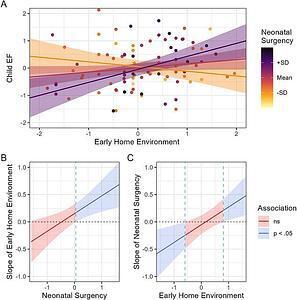
Early risk factors do not affect all children in the same way, ADHD study
(Photo: BGU)
Auerbach said the findings highlight the importance of early intervention. “Understanding this can help tailor early environments to better support children who need it most,” she said.
Additional researchers on the study included Prof. Naama Atzaba-Poria and Drs. Rivka Landau, Shoshana Arbelle and Michael Karplus.